Socialist António José Seguro wins Portugal’s presidency in landslide over far-right rival
Runoff delivers 66.8% and a record 3.48 million votes; turnout reaches 50.1% as storms force limited delays; establishment figures offer swift congratulations while analysts see far right nearing its electoral ceiling.
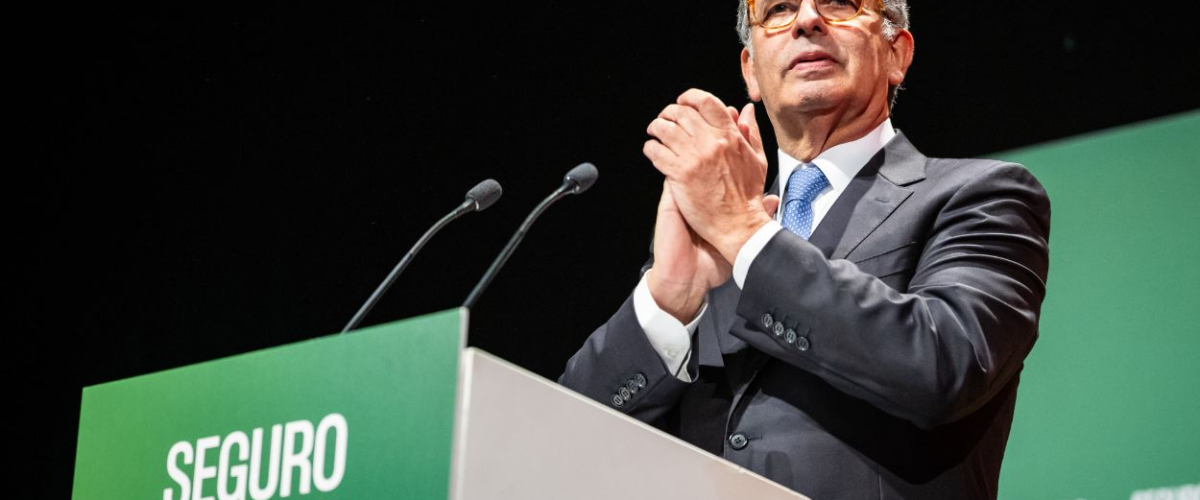
LISBON — António José Seguro won Portugal’s presidential runoff by a commanding margin on Sunday, securing 66.82% of the vote against far-right challenger André Ventura’s 33.18% and notching a record 3,480,158 ballots in support. The decisive result positions the moderate Socialist as president-elect after a contest that drew broad backing from voters across the political spectrum.
Seguro, a former Socialist Party leader, addressed supporters from Caldas da Rainha, north of the capital, calling the outcome a special victory in an election for the head of state. Official figures released by the Ministry of Internal Administration reported turnout at 50.11%, with blank ballots at 3.17% and invalid votes at 1.78%.
The presidential election process, consisting of two rounds, culminated in the runoff vote, with Seguro receiving more than twice as many votes as he did in the initial January 18th vote. Ventura, who campaigned on an anti-establishment platform and promised to end what he described as decades of corruption by mainstream political parties, received over 1.7 million votes. While this was roughly 413,000 more votes than he received in the first round, it was not enough to win a majority.
Several prominent conservative figures endorsed Seguro ahead of the runoff, an unusual crossing of political lines in Europe that analysts said helped consolidate a two-thirds majority against Ventura’s bid. The president-elect campaigned on uniting the country and building political bridges at a time when parliament remains highly fragmented.
The scale of Seguro’s victory set a modern-era benchmark, surpassing the popular vote tally achieved by Mário Soares in the 1991 presidential election. The win followed a day of voting partially disrupted by severe weather in recent weeks: storms and flooding prompted authorities to relocate 66 polling stations and delay voting by one week in three localities. Even so, participation exceeded that of some recent presidential contests.
Concessions and congratulations arrived quickly. The outgoing head of state, Marcelo Rebelo de Sousa, congratulated Seguro and said he would receive the president-elect on Monday at 16:00 local time. Prime Minister Luís Montenegro also offered congratulations, describing Seguro as a guarantor of a spirit of convergence and pledging the government’s full cooperation with the next head of state.
From abroad, European leaders welcomed the result. The head of the European Commission praised Portuguese voters for making their voices heard despite the devastation caused by recent storms, calling the outcome a testament to democratic resilience. The president of the European Council, António Costa, also congratulated Seguro and wished him success in office.
Ventura acknowledged defeat but insisted his movement was advancing. “We did not win, but are on the path to this victory,” he told supporters on Sunday night, later arguing that the result confirmed his leadership of Portugal’s right. Political scientists cautioned that while the far right’s rise has been marked in recent years, Ventura struggled to capture a majority of center-right voters in the presidential contest. One analyst said he doubted Chega could expand much beyond roughly a third of the electorate — the share reached on Sunday — even as voters become less hesitant about backing a far-right option.
The outcome reverberates through a political landscape where Chega has already become the main opposition in parliament following last year’s general election. Some analysts said the cross-party backing for Seguro could energize a centrist effort to keep Ventura’s party from executive power in future contests. Others noted that parliamentary elections are more fragmented affairs with multiple competitors, a dynamic that could dilute Chega’s current momentum.
On Lisbon’s streets, reactions reflected both relief and lingering concern. “Perhaps we can say that we are more reassured that the far right will not have much chance of growing further in Portugal,” said Jorge Ferreira, 66. But for younger voters, the trend remained worrisome. “It’s immensely worrying that the far-right candidate has risen so quickly in successive elections,” said Matilde Ribeiro, 24.
As the transition begins, Seguro’s first steps will be closely watched for signs of how he intends to bridge divides in a polarized environment. His immediate agenda includes consultations with state institutions and political leaders — a process that will test the cooperative tone set on election night and shape relations with a government that has pledged to work with the new head of state. For now, the runoff’s message was unambiguous: a broad coalition of voters rallied to block the far right at the presidential level, even as its parliamentary influence endures.