Portugal votes in first presidential run-off in 40 years as storms disrupt balloting
Socialist António José Seguro is favored over far-right challenger André Ventura; flooding forces postponements in hardest-hit areas.
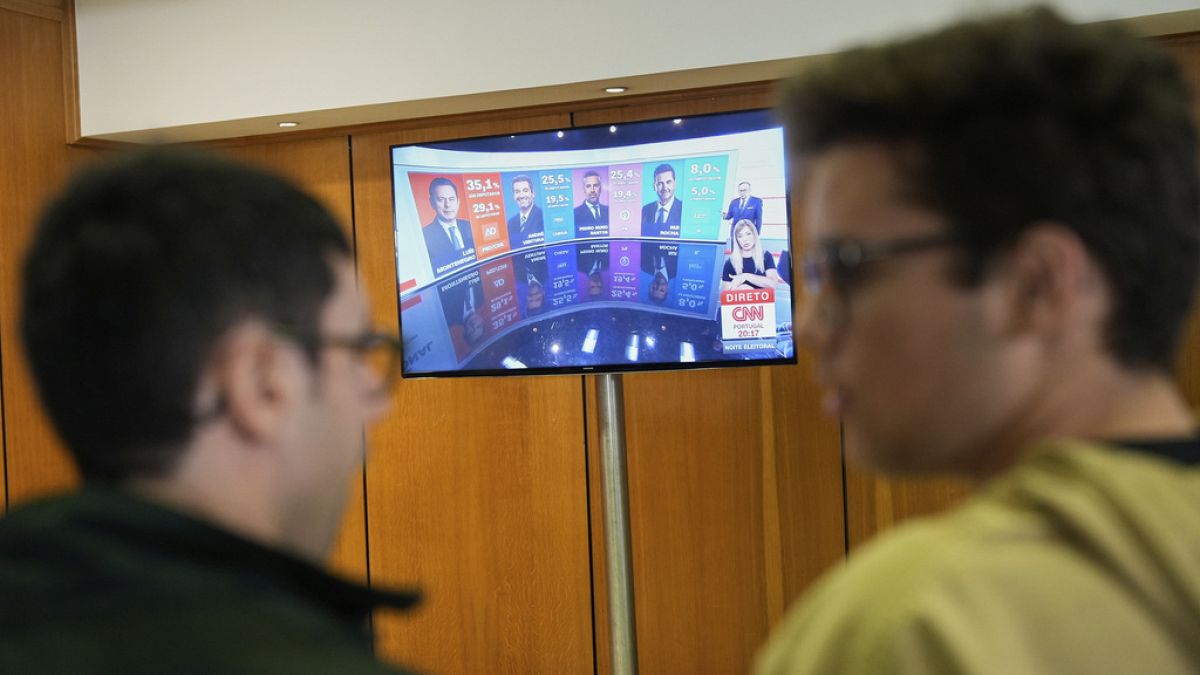
Portugal headed back to the polls on Sunday for a presidential run-off, the first in four decades, in a race widely seen as a test of the country’s political center against a resurgent far right and an electorate battered by deadly winter storms.
Voters are choosing between António José Seguro of the Socialist Party and André Ventura, leader of the nationalist Chega movement. Seguro led the first round in January with about 31% of the vote to Ventura’s roughly 24%, and opinion surveys in the final stretch indicated the Socialist candidate held a commanding advantage, approaching 70% support. The far right’s final tally, however, is being closely watched for signs of its momentum.
The campaign’s final days were overshadowed by severe weather that swept in from the Atlantic, killing at least seven people, triggering widespread flooding and inflicting an estimated €4 billion in damage. While conditions improved over the weekend, authorities postponed voting by one week for nearly 32,000 people in 14 of the worst-affected constituencies. Elsewhere, polls opened as planned on Sunday morning, with initial projections expected in the evening and results later in the night.
Ventura, trailing in the polls, had called for the election to be postponed nationwide, a demand that was rejected. The government maintained that voting could proceed safely despite disruptions, and the outgoing head of state pointed to the fact that the last presidential election went ahead even at the height of the coronavirus pandemic. Seguro accused his rival of trying to depress turnout.
Chega, founded in 2019, is now the largest opposition force in parliament, and Ventura’s performance will help define the far right’s leverage after the presidential vote. The center-right Social Democratic Party, whose candidate finished a distant fifth in the first round, later threw its support behind Seguro, underscoring how the run-off has reordered traditional alliances.
Portugal’s presidency is largely ceremonial but carries meaningful constitutional powers. The president represents the nation, ensures compliance with the constitution, appoints the prime minister, and can promulgate or veto legislation—vetoes that can be overturned by parliament. The office also holds a potent reserve authority to dissolve parliament and call early elections, making the occupant an important arbiter in times of political strain.
Stability has been a central theme. Portugal has experienced repeated bouts of political turbulence in recent years, and the next president will be expected to work with a center-right minority government. Seguro has presented himself as a moderate prepared to cooperate across the aisle and to calm partisan tensions.
Immigration has loomed as a sharper fault line. The rise of Chega has amplified anti-immigration rhetoric, prompting unease among immigrant communities, including a large Brazilian diaspora. Advocacy groups warn that stricter enforcement policies and tougher checks would hit foreign workers who, they argue, play a critical role in sectors facing labor shortages.
Roughly 11 million citizens at home and abroad are eligible to vote. With storms still affecting parts of the country and voting non-compulsory, turnout emerged as a key variable. Exit polls were due after polling stations closed, with most official results expected later Sunday. The winner will take office in March, succeeding Marcelo Rebelo de Sousa after two terms.
The run-off returns Portugal to a political milestone last reached in 1986, when Socialist Mário Soares won the presidency after rallying the left between rounds. Forty years on, a new contest is playing out under very different conditions, with a far-right challenger testing the bounds of the traditional party system even as a moderate front-runner seeks a mandate to steady the country’s institutions.